


How to Become a Software Tester: What You Need to Know to Start Your Manual Testing Job

 16 MIN
 20 Aug 2025
Wondering how to become a software tester? If you spot glitches in apps and want to get paid for it, you’re in the right place. As more companies embrace digital transformation, the need for testing expertise is rising. In this article, you’ll find everything you need to start your career in software testing – from key skills you need to job tips. Let’s get started!
Table of content
The software testing profession is expanding, with employment for QA testers projected to grow by 17% between 2023 and 2033. The field is beginner-friendly: although 73% of manual testers hold a bachelor’s degree (often a degree in computer science or IT), a four-year college degree isn’t mandatory. Many testers start through intensive courses or self-study, gradually building necessary skills and knowledge. So, if you’re wondering how to become a tester for software, this career path offers accessible job opportunities to get started and grow in the industry.
Manual tester job description and responsibilities
A manual tester (or QA manual tester) is a quality assurance professional who checks software applications by hand before it goes live, ensuring it’s bug-free and meets requirements. They act like end users – clicking through interfaces, entering data, and trying to “break” the software to uncover issues.
Unlike automated testers, manual testers don’t use test scripts or tools but rely on careful observation and understanding of how the aspects of software should work. If you’re curious about how to become a manual QA tester, this role is a great way to start building your QA skills and gain hands-on experience in software quality assurance.
Core manual tester responsibilities
Some common manual tester responsibilities include:
- Designing test plans and test cases: Creating comprehensive scenarios and step-by-step testing methodologies to verify software functionality and edge cases. This ensures all features and requirements are covered when testing software products.
- Executing tests to find defects: Running the test cases on web or mobile applications and actively looking for bugs or inconsistencies in the system. This includes exploratory testing, where you creatively probe the software for unexpected issues.
- Reporting and documenting bugs: When an issue is found, documenting the exact steps to reproduce it and logging it clearly (often in a bug tracking tool like Jira). Good bug reports help software developers understand the problem and how to fix it.
- Performing regression testing: Re-testing software after fixes or updates to ensure that new changes haven’t introduced new bugs. A manual tester often reruns earlier tests (regression tests) on a new build of the software.
- Collaborating with the team: Working closely with developers, product managers, and analysts to clarify requirements and verify fixes. Communication skills are key – a tester provides feedback and insights to ensure software quality.
Manual testers may also participate in setting up test environments or preparing test data and contribute to improving QA processes.
The manual tester ensures that the final product works correctly and offers a smooth user experience before it reaches customers.
Essential manual testing skills for freshers
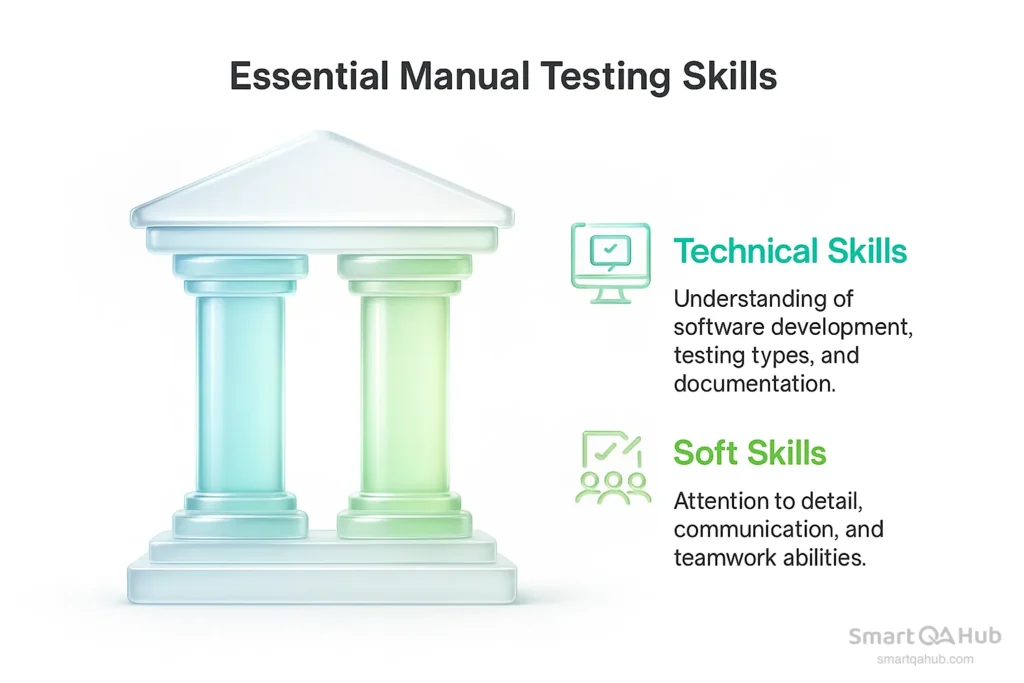
To excel as a manual tester, it’s important to develop both your technical expertise and your communication or collaboration skills.
While coding expertise isn’t required, understanding of software development processes is essential. Equally important are personal qualities like attention to detail and teamwork.
Key technical manual tester skills
- Basics of software development: Knows the software development life cycle (SDLC) and where testing fits in. Familiarize yourself with Agile and Waterfall methods.
- Types of software testing & concepts: Understands functional testing, performance testing, usability testing, regression, API testing, smoke testing, and user acceptance testing.
- Test documentation: Learn how to write and execute test cases and plans, compare expected vs. actual results, record actual results and log any bugs clearly using issue-tracking tools like Jira or Bugzilla.
- Programming: Programming skills aren’t required to start manual testing, but understanding testing tools and having strong problem-solving abilities are essential. Basic scripting can help if you want to move into automation testing later.
Other technical skills that can give you an edge include a basic understanding of databases and SQL (since many applications rely on databases – being able to run a simple query to verify data can be handy), and familiarity with how web applications work (HTTP, browsers, etc.). These are often “nice-to-have” skills for beginners. For instance, knowing how to check browser console logs or use developer tools to inspect elements can help you investigate bugs more effectively. You can develop many of these skills through a good manual tester course or pick them up on the job as you gain experience.
Important soft skills
- Attention to detail: Spot even small inconsistencies or errors.
- Analytical thinking: Break down complex features and think creatively about how they might fail.
- Communication: Write clear bug reports and collaborate well with developers and teams.
- Teamwork: Work smoothly with cross-functional teams to improve the product.
- Problem-solving & creativity: Be curious and resourceful in finding and fixing bugs.
- Adaptability: Quickly learn new tools, platforms, and testing techniques.
- Patience & diligence: Testing can be repetitive — persistence is key.
Once you’ve built up these skills, you’ll be on the right path toward a successful and fulfilling career as a quality assurance engineer.
How to become a software tester step by step
Launching a career in manual software testing doesn’t follow a universal blueprint, but many professionals have paved their way by taking similar foundational steps.
1. Tester career education and alternatives
You may ask yourself whether a degree is required. Although many manual testers hold a bachelor’s degree in fields like computer science or IT, it is not always mandatory. The degree can offer a strong foundation, but you can still break into the field through alternative paths like self-study or online training. Many successful testers come from diverse backgrounds or don’t have a degree at all. Intensive courses, online training, and certifications can quickly prepare you to become a certified tester. Ultimately, what matters most is demonstrating the skills to do the job effectively.
2. Manual tester course options
For beginners, structured learning is crucial. There’s an abundance of free and paid online courses on platforms like Udemy or BrowserStack’s Test University. Look for a QA manual testing course that teaches you how to write test cases, report bugs, and use popular tools like Jira. Many software testers learn by doing – practice testing on demo apps or websites to build hands-on experience.
Pro tip: Foreign language skills give you a competitive edge. English is nearly essential in software testing, while German can be a strong advantage when applying for jobs.
3. Build your QA tester portfolio
Lacking job experience in software testing? No worries. Creating a portfolio showcasing your abilities can make a big difference. Leverage platforms like GitHub to showcase your testing skills – upload sample test cases, detailed bug reports, and structured test plans to build a visible, professional portfolio.
Highlight the tools you know – such as Jira, TestRail, or Selenium – to demonstrate versatility. Add projects from online courses or your personal practice to your portfolio – test basic apps, note any bugs, and write clear, well-structured reports to demonstrate your manual testing skills.
Pro tip: Contribute to open-source projects by testing their software and reporting bugs. It’s a fantastic way to gain real experience and get noticed by employers. Try:
- Up For Grabs
- Good First Issues on GitHub
- First Timers Only
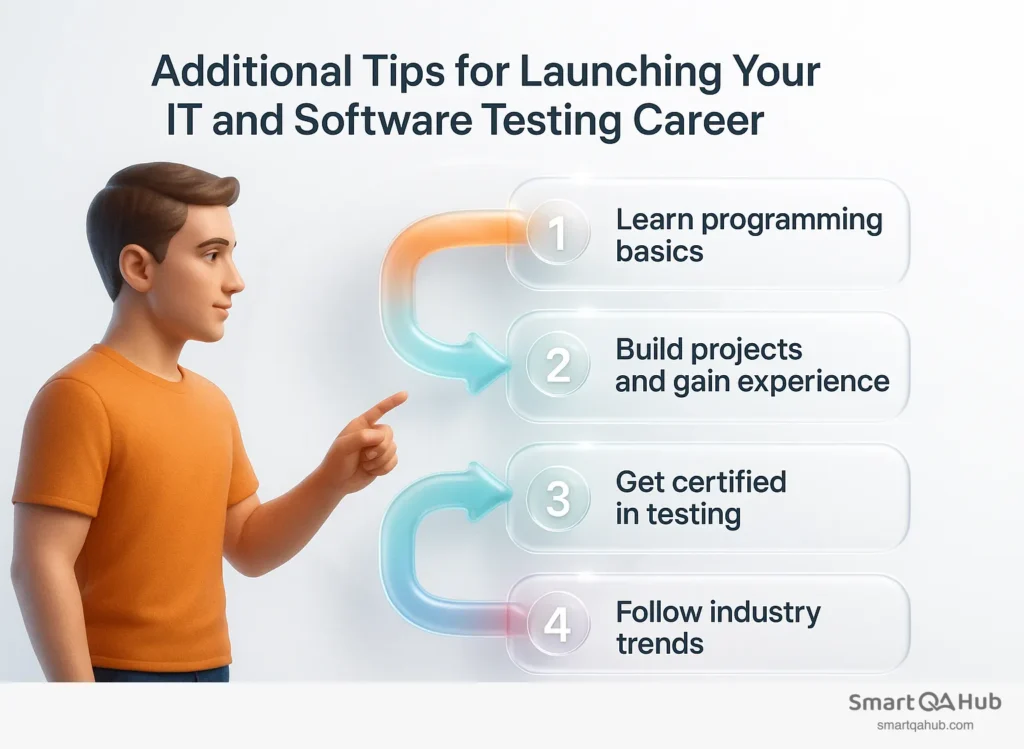
Additional tips for launching your IT and software testing career
Join online testing communities: Engage with groups on Reddit (r/softwaretesting), Ministry of Testing, or LinkedIn. These communities provide support, advice, and job leads. Networking is key to learning and allows you to get noticed.
Get certified:
- ISTQB Foundation Level
- Certified Software Tester (CSTE)
- Agile Tester Certification
Learn basic scripting: Even as a manual tester, understanding simple scripting languages like Python or JavaScript can give you a valuable edge and open doors to automation roles down the line.
Attend meetups and conferences: Whether local or virtual, QA and tech meetups, webinars, or conferences help you expand your network and stay current with industry trends. Check out:
- Meetup – QA Groups
- TestCon Europe
- QA Global Summit
Volunteer for testing projects: Open-source projects often welcome aspiring software testers. Volunteering builds practical experience and shows initiative. Good starting points:
- CodeTriage
- Open Source Friday
Practice using popular QA tools: Familiarize yourself with widely used tools such as:
- Jira
- TestRail
- Bugzilla
- Selenium
- Postman
Hands-on knowledge is highly valued by employers.
Cultivate soft skills: Effective communication, collaboration, and problem-solving are equally vital alongside technical knowledge in IT careers.
Pro tip: Contribute to an open-source project by testing its software and reporting bugs. Open-source projects often welcome new testers, and this can give you real-world experience. Plus, you’ll have tangible bug reports and maybe even developer acknowledgments to show in interviews. It’s a practical way to get experience and something you can mention on your resume to strengthen your credibility as a newbie software test engineer.
How to land your first manual software tester job
Getting your first job in manual software testing can feel overwhelming – especially when most software testing offers ask for 1–2 years of experience. But here’s the truth: you don’t need to be an expert to get started. You need a smart strategy, strong fundamentals, and the right way to present your skills.
In this guide, you’ll find practical, beginner-friendly steps to help you break into QA (Quality Assurance) and land that first role – even if you’re self-taught or fresh out of a bootcamp or a QA manual tester course.
1. Target the right entry-level roles
The first mistake many beginners make is applying for mid-level roles that require years of experience or automation skills. Instead, look for job titles tailored to beginners, such as:
- Junior QA Tester
- QA Intern
- Manual Test Analyst (Entry-Level)
- Trainee Software Tester
These roles are more forgiving of gaps in experience and often come with mentorship or on-the-job training. While some job descriptions say “1–2 years of experience preferred,” that’s not always a deal-breaker.
You can offset the lack of work experience by showcasing personal projects, online course certifications, or freelance gigs. A simple portfolio demonstrating your testing process can make a big difference.
Where to search for beginner-friendly QA jobs:
- LinkedIn Jobs
- Indeed
- We Work Remotely
- RemoteOK
- Ministry of Testing job board
If you are just starting, consider enrolling in a manual testing online training to build the necessary skills and confidence.
2. Build and leverage your QA testing network
Many jobs are filled through referrals and private community channels long before they’re posted on job boards. That’s why building a network can significantly increase your chances.
Join QA communities where professionals hang out:
- Reddit – r/softwaretesting
- Ministry of Testing
- LinkedIn QA Groups (search for “software testing” or “QA”)
Don’t just lurk – participate. Ask questions, comment on posts, and share your progress. You’ll build relationships and possibly find mentors who can recommend you or refer you to hiring managers.
3. Be ready to demonstrate your testing skills
In QA interviews, you’ll often be asked to perform basic testing tasks or describe how you would test a feature.
Common examples:
- How would you test a login form?
- How would you test a calculator app?
- What edge cases would you consider?
Employers want to see your thinking process.
Focus on explaining:
- How you create test cases
- How you identify edge cases (e.g., dividing by zero in calculator)
- How you document and report bugs clearly
Practice on demo apps to gain confidence. Here are some popular practice apps:
- OpenCart Demo Shop
- Restful Booker
- Sample apps by Sauce Labs
Practice on demo apps to gain confidence. Here are some popular practice apps: OpenCart Demo Shop, Restful Booker, Sample apps by Sauce Labs. You can also use browser extensions like Bug Magnet to explore test inputs.
If you have completed a QA manual testing training, use that knowledge here to shine in interviews and start a career!
4. Gain experience through internships and freelance job as a software tester
If you don’t have official job experience yet, try making your own chances to gain it:
- Apply for internships, even if unpaid – they provide valuable references
- Consider taking on freelance testing projects through websites such as Upwork or Fiverr
- Join crowdtesting platforms for paid real-world testing projects:
- Testbirds
- uTest
- UserTesting
Each project you finish adds value to your portfolio and demonstrates your proactive attitude.
5. Craft a QA resume that stands out
Your resume is your marketing tool. Customize your resume to showcase your QA abilities and growth potential:
- Include key technical skills such as creating test cases, tracking defects, and using bug tracking tools like.
- Mention projects from courses, freelance work, or practice with measurable results (e.g., improving usability”).
- Use keywords from job descriptions like “functional testing,” “regression testing,” or “Agile methodology” to get past automated resume filters.
- Include certifications (ISTQB Foundation Level being one of the most recognized in the industry).
- Highlight your soft skills as well, such as effective communication, keen attention to detail, and the ability to work well in a team.
- Keep it concise, well-structured, and error-free.
Following these steps will give you a clear path toward your first manual tester role. Remember: persistence and continuous learning are key. Every bug you find and every test case you write brings you closer to your dream job.
What’s next and how to become a QA professional?
Quality assurance is a dynamic field with plenty of room for growth, specialization, and career advancement. So, what comes after your junior manual tester role? How do you evolve from a beginner into a seasoned QA professional — or even an expert? Here’s a practical guide to help you move forward.
Keep learning and broaden your skill set
Today’s QA teams highly value testers who can handle both manual and automated testing. While manual testing remains essential, gaining test automation skills will open many more doors. Once you’re comfortable with manual testing, consider learning automation tools or programming languages like Selenium WebDriver with Java or Python, or modern frameworks like Cypress. Even if your current role is 100% manual, understanding automation basics makes you more versatile and future-proof.
According to Ministry of Testing, combining manual and automated testing skills significantly boosts your marketability and career opportunities. If you want to learn automated testing, we recommend you check our article – What Is Automation Testing.
Consider specializing or diversifying within QA career path
Quality assurance covers a broad spectrum. You might choose to specialize in areas like mobile app testing, security testing, performance/load testing, or usability testing. Alternatively, some testers transition into roles such as QA analyst, focusing on requirements and test strategies, or QA lead/manager, where they oversee teams and mentor junior testers.
A common career progression looks like this:
Junior Tester → Mid-Level Tester → Senior Tester / QA Analyst → QA Lead → QA Manager

Titles may vary by company, but the trajectory involves increasing responsibility. After a few years, you’ll have a clearer sense of your interests – whether that’s diving deep into technical testing or leading projects and teams.
Pursue advanced certifications and further education
If you started with entry-level certifications like ISTQB Foundation, you can advance to certifications such as ISTQB Advanced Level or Certified Test Manager. These credentials enhance your credibility and can accelerate your path to leadership roles.
If you don’t have a formal degree and feel it’s holding you back, consider further education or complementary certifications in project management or Agile methodologies (e.g., Scrum Master, Six Sigma). However, remember that in QA, hands-on experience often speaks louder than certificates — but in larger organizations, certain qualifications can help fast-track your promotions.
Maintain a quality mindset and stay curious
True QA professionals never stop learning. Keep up with industry trends and best practices by reading articles, following thought leaders on platforms like Ministry of Testing, and attending webinars or workshops. The QA field is constantly evolving, with hot topics such as AI in testing, DevOps, and continuous integration/continuous testing gaining traction.
You don’t need to be on the bleeding edge as a beginner, but staying aware of new developments helps you navigate your career strategically.
Network actively in professional circles
Engaging with the QA community is one of the best ways to grow from a competent tester to a great one. Attend conferences like TestBash, join forums, participate in local meetups, and connect with peers on LinkedIn. Networking exposes you to new ideas, tools, tips, and mentorship opportunities that can accelerate your professional development.
Keep improving with every project
Becoming a QA professional is a continuous journey. After landing your first job, keep the momentum going by learning something new from each project. Volunteer for challenges just outside your comfort zone, seek feedback from colleagues, and refine your skills constantly. Over time, you’ll become a go-to expert whom others look up to for advice and guidance.
(And one day, you might be the one writing a blog post like this, helping the next generation of testers get started. 😉)
FAQs: Frequently asked questions about how to become a tester
How to become a manual tester without a degree?
How to become a software quality assurance tester?
How to become a good software tester?
How do I start my QA career?
Your QA journey starts with one test case
You don’t need an ideal background to begin your journey in software testing – what truly matters is curiosity, persistence, and an eagerness to learn. Manual testing is a great way to break into tech and build valuable skills like attention to detail, problem-solving, and clear communication.
Start with small steps: test a feature, record what you discover, learn from it, and keep practicing. Every bug you report strengthens your skills and builds your career foundation. Remember, great testers don’t just find bugs – they help deliver better software.
So take that first step – write your first test case and bug report. The QA world is ready for you!


